November 2025
The land and new homes market on the Isle of Wight is undergoing rapid change. Updated Local Plan viability evidence, a forthcoming national register of land control agreements, and evolving planning and case law are collectively redrawing the map for how land can be brought forward.
At BCM Wilson Hill, we are working closely with landowners, promoters, and developers to anticipate these shifts by helping to unlock value and maintain momentum in a tightening policy and cost environment.
Viability Under Pressure and How to Respond
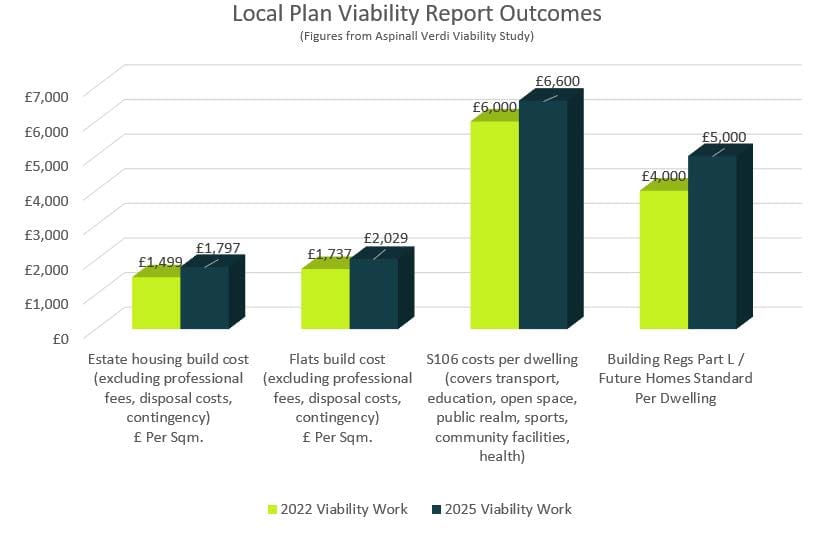
The latest Updated Local Plan Viability Report (2025) by Aspinall Verdi sets out what we are seeing every day in the marketplace: delivery risk is increasing because cost inflation has outpaced achievable sales values. Aspinall Verdi note:
Key drivers of the squeeze
- Build cost inflation: Estate housing costs have risen to around £1,800 per m2 (up 20%) and flats to £2,030 per m2 (up 17%). Labour availability and material pricing remain volatile.
- Regulatory uplift: Compliance with Building Regulations Part L and Future Homes Standard now adds roughly £5,000 per dwelling for houses, plus new allowances for health and community infrastructure.
- Section 106 and infrastructure contributions: These now average £6,600 per unit, about 10 per cent higher than 2022 levels.
- Sales value growth: Island house prices have typically risen by only £150–£175 per m2, offsetting barely half of the cost increase.
Our opinion:
Whilst the above refers to ‘estate housing’, we note that this term often reflects larger-scale schemes, meaning the underlying assumptions may not fully align with smaller or more bespoke projects where, even when using BCIS indices, shows a stark jump in build costs. We must also remember that the indices are based on the primary build cost and exclude external works, contingencies, finance, warranties, professional/design costs or similar. In addition to the above, we note that the Aspinall Verdi modelling does not fully reflect several
significant and now unavoidable cost burdens. In particular:
- Nutrient neutrality mitigation, which for many sites, introduces an additional cost layer not captured in the viability assumptions.
- Biodiversity Net Gain (BNG), where on-site delivery, off-site units, or the purchase of statutory credits all represent potentially substantial costs; and
- Future costs not factored into existing/current cost profiles, including the Building Safety Levy (to be enacted 1st October 2026) and reforms to landfill taxes.
Taken together, these pressures indicate that real-world viability is often more constrained than the headline figures suggest, emphasising the importance of early strategic advice, clear promotion strategies, and careful alignment of land value expectations.
Impacts on delivery
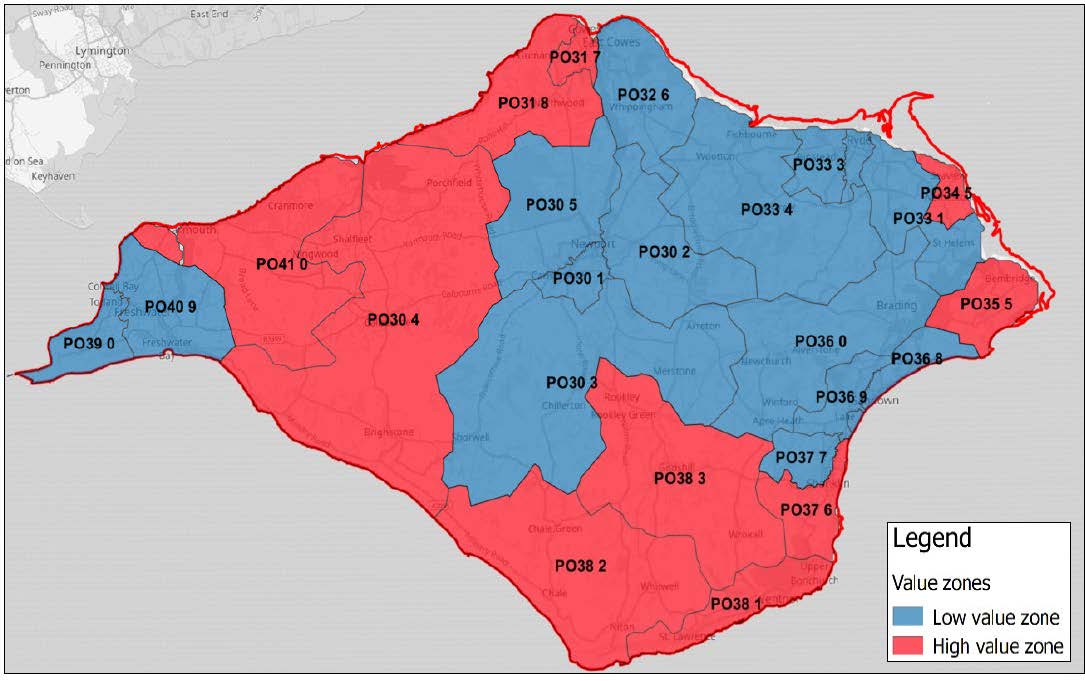
Under these conditions, the blanket 35 per cent affordable housing requirement proposed in the draft Island Planning Strategy is no longer deliverable for much of the Island.
- In lower-value zones such as Newport, Ryde and East Cowes, most typologies are now marginal or unviable at that rate.
- The higher-value coastal and rural areas of Cowes, Ventnor, Bembridge and Seaview can still support 35 per cent affordable provision and remain broadly viable.
- Brownfield apartment schemes are consistently unviable even with 0 per cent affordable due to high build cost-to-value ratios.
The policy response
The emerging Local Plan now proposes a graduated H5 policy:
- 15–25% affordable housing in lower-value zones (depending on scale and land type)
- 35% retained in higher-value zones
- Flexibility for apartment-led brownfield sites, where affordable provision may be waived in favour of viability or environmental gain.
Our Opinion
Although moving in the correct direction, draft policy H5 seeks to uplift the proportion of affordable and social rent to 80% where previously it was 70%. Even before contemplating the financial modelling, we must recognise that finding a Registered Provider (even at a national level) is a considerable challenge.
Policy H5 must also be read in conjunction with draft Policy AFF1 which seeks to make homes affordable by lowering the discounts. AFF1 confirms:
- For one and two bedroom homes: Up to 70 per cent of market sale, rent or the local housing allowance, whichever is the lowest.
- For three bedroom homes: Up to 65 per cent of market sale, rent or the local housing allowance, whichever is the lowest.
- For homes with four or more bedroom: Up to 60 per cent of market sale, rent or the local housing allowance, whichever is the lowest.
Although laudable, there is a fear that the policy revisions are potentially ‘Robbing Peter to Paul’ and will have little effect to secure real-life delivery. It could be argued that policy H5 has not gone far enough. To strain matters further, the Council’s Cabinet, when considering policy H5 recommended a further reduced cap at 55% of open market value. While the intention is to keep marginal schemes deliverable, there is a considerable risk that the cap redistributes the problem and solves little. A clearer implementation framework and early monitoring will be essential to ensure the cap supports delivery without undermining wider policy outcomes.
In short, early viability recalibration is essential. With informed analysis and strategic adjustment, many schemes can remain deliverable even in today’s tighter cost environment.
Transparency and Control: The 2026 Register
From April 2026, the Land Registry’s public register of contractual control agreements will make details of options, promotions, and conditional contracts visible for the first time.
This applies retrospectively to any agreements since April 2021, with criminal sanctions for non-compliance or false information.
Landowners and developers should begin auditing their current agreements and ensuring compliance with disclosure requirements. Reviewing confidentiality clauses and considering how commercial information will be presented on the public register will be important preparatory steps before implementation.
Unlocking Flood-Constrained Land
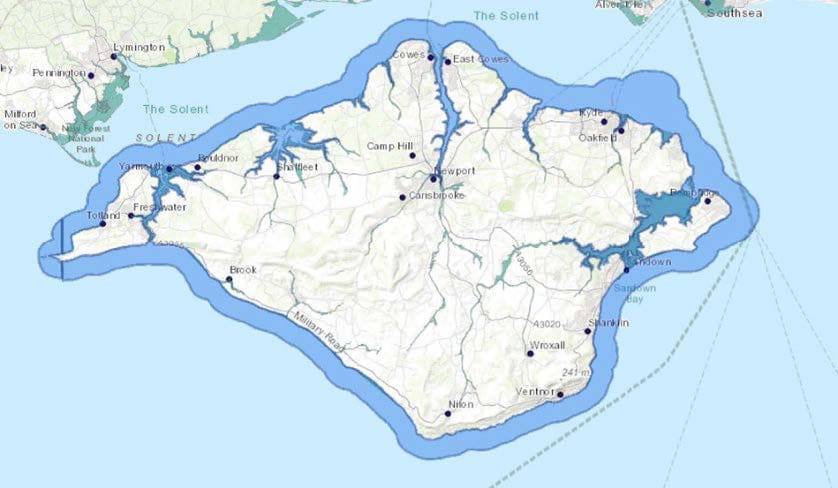
Recent revisions to the NPPF (National Planning Policy Framework) and the Flood Risk and Coastal Change Planning Practice Guidance (PPG) have been introduced in response to emerging environmental evidence, and the need to accelerate housing delivery on constrained sites. While fluvial and coastal flood risk zones remain unchanged, ensuring consistency in long-term risk assessment, the guidance now provides greater flexibility in how flood risk is managed in development planning.
Changes earlier this year to surface water management reflect improvements in modelling and local drainage strategies. These updates should be validated by the vendor to “prove the point,” giving assurance that sites are safe without the need to undertake sequential or exception tests. In effect, the revisions aim to strike a balance between risk management and practical development opportunities, allowing design-led solutions to make previously constrained land viable while maintaining resilience and safety to flooding.
These clarifications now allow design-led master planning to retain built development in low-risk areas while using higher-risk zones creatively for open space, Sustainable Drainage Systems (SuDS), and flood storage. Importantly, for allocated sites where sequential and exception tests were satisfied at the plan preparation/adoption stage, there is no requirement to repeat them for the application.
By reassessing such sites through updated Flood Risk Assessments and thoughtful blue-green infrastructure design, land previously considered unsuitable can potentially be brought back into viable, safe, and resilient use.
Moving Forward
Policy reform, cost inflation, and legal change are reshaping how land is brought forward on the Isle of Wight. Yet within this transition lies opportunity:
- Affordable Housing: Graduated policy adds flexibility. Early reassessment of agreements against current viability avoids over-commitment and protects land value.
- Flood Risk: Updated NPPF and PPG guidance unlock previously constrained sites. Design-led planning and robust mitigation make marginal land viable and resilient.
- Viability & Costs: Build costs, regulatory requirements, nutrient neutrality, and biodiversity obligations continue to tighten margins. Early, detailed appraisals are essential.
- Transparency & Land Control: The 2026 Land Registry register rewards clear, well-structured agreements. Auditing and preparation reduces risk and preserves flexibility.
- Strategic Alignment: Align planning, valuation and strategy to unlock value, maintain momentum, and deliver sustainable, resilient development.
BCM Wilson Hill remain focused on helping clients navigate these evolving conditions, aligning planning, valuation, and strategy to maintain progress, alleviate risk, and unlock sustainable development.