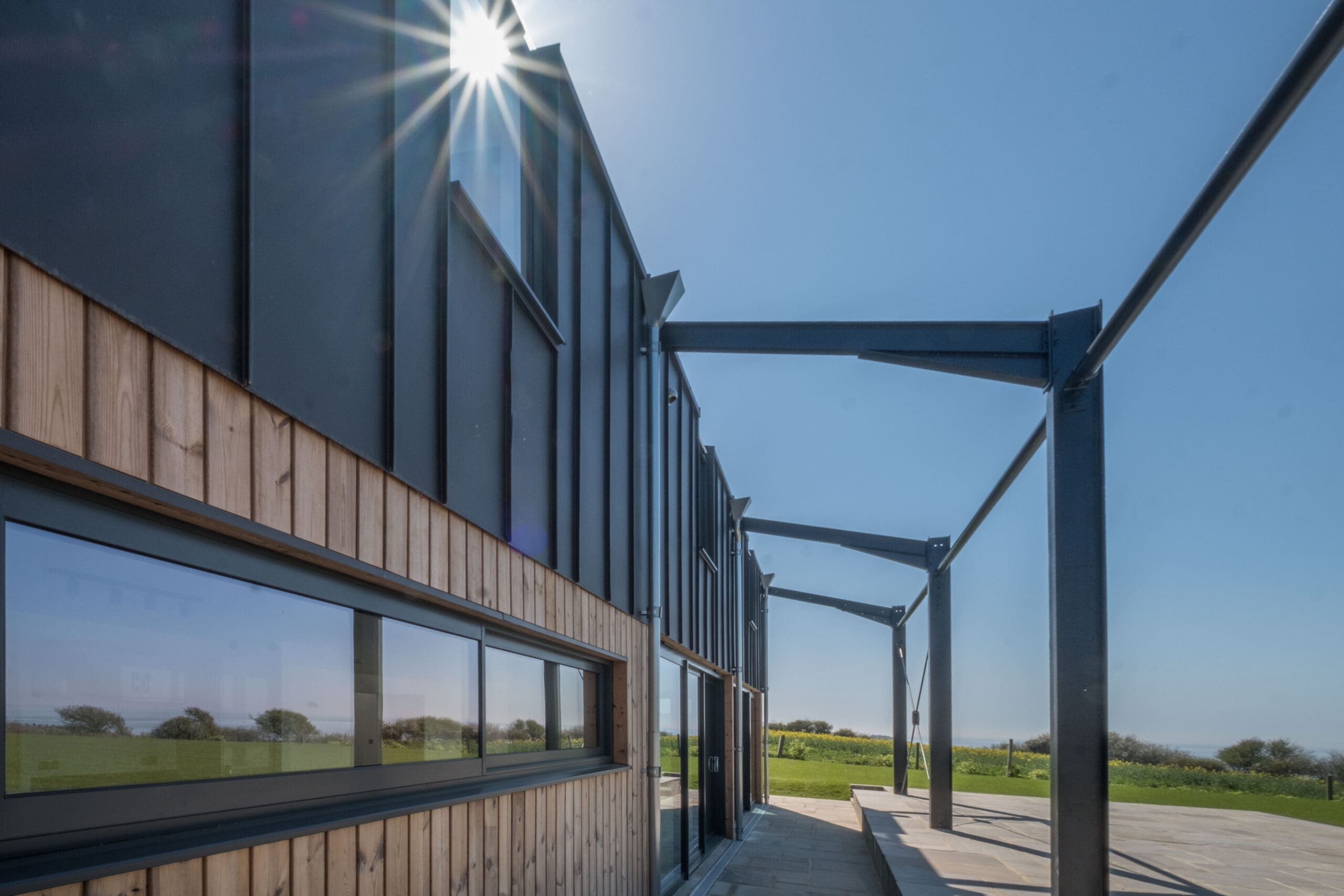
For applicants, landowners, farmers, and estate managers in Hampshire, West Sussex, the Isle of Wight, and across the South of England, navigating rural planning permission has become more complicated. In 2026, changing regulations, environmental priorities, and local planning policies are affecting how rural land can be used and developed; whether you are considering permitted development, a change of use, a new build, or diversification. Although national policy (the NPPF) promotes a prosperous rural economy through “all forms” of development, this is balanced against detailed local policies which can sometimes pull in the opposite direction. In part, policies governing rural land are more restrictive and, in many situations, rightly so.
What do we mean by “rural development”? Often, the mindset is drawn to traditional forms of planning consent on rural land, including change of use, prior approvals, and diversification. However, rural land is a diverse and dynamic environment which underpins many types of rural planning—from small-scale conversions to strategic schemes—so early advice from a rural planning consultant can help you work out what is realistically achievable.
It is integral to delivering national energy security through solar, wind, battery storage, anaerobic digestion, and nuclear. It is also a focus for bespoke retail and food-and-beverage destinations, and a strong draw for our tourism and leisure industries, whether backed by pension funds, banks, landowners, and/or new lifestyle entrants. It fuels the imagination and entrepreneurial spirit behind our breweries and vineyards, wedding venues, sports facilities, and active-entertainment destinations.
Rural land forms the boundary between town and country and provides a strategic platform for population growth and corresponding commercial and housing development. It also creates the strategic corridor for transport, distribution, and essential infrastructure, as well as providing indigenous land-borne aggregates to stabilise supplies and reduce inflationary build costs. It provides land for waste management, water irrigation, and, of course, food supply.
Whether you’re considering a change of use, new build, or diversification project, understanding the planning permission process is essential for successful UK rural property development.
Rural planning permission process: how it works and why timeframes matter
Countryside planning permission exists to enable development while protecting rural landscapes. Local planning authorities assess proposals against factors that are both prescriptive and subjective, such as environmental impacts (in both its narrowest and broadest sense), design, access, and alignment with policy.
Many would agree the planning system never fully catches up with itself, and material considerations can become more complicated and/or outdated before they meaningfully inform commercial decisions. A critical factor in most project timelines—and one that will influence any planning submission date—is the start of the relevant ecological survey seasons. Missing key survey windows can create considerable delay and risk.
Most projects begin with either a pre-application enquiry or a full planning application. A pre-application allows landowners to get feedback before formally submitting plans, which can be an important step in identifying potential issues early. Full applications require detailed drawings, supporting documents, and—in most, if not all, cases—environmental assessments.
In 2026, planning departments are focusing on sustainability, biodiversity, and community impact. This means proposals that demonstrate environmental responsibility and long-term benefits are more likely to gain approval, particularly as applications should be determined on the “planning balance”—noting that most projects have both impacts and benefits. It is the job of a planning consultant to articulate that balance and to signpost councils to the merits of the application.
Key 2026 updates for rural planning permission (including Biodiversity Net Gain)
Recent updates to planning frameworks are influencing rural development advice across the UK. For example, Biodiversity Net Gain is now an essential requirement for many developments and means landowners and applicants must ensure their projects leave the natural environment in a better condition than before. This could be achieved by creating new habitats, enhancing existing ecosystems, or offsetting impacts elsewhere.
Permitted development rights offer opportunities for certain types of conversion, such as agricultural buildings being repurposed into residential or commercial spaces. However, stricter criteria and local interpretations mean these rights are not always straightforward to apply.
Common reasons rural planning applications are delayed or refused
Despite careful planning, many rural applications face delays or refusals due to avoidable mistakes. One of the most common issues is underestimating local policy requirements. Each council has its own development plan, and failing to align with these prescriptive or subjective policies can negatively impact an application.
This is particularly important given the recent changes via our planning appeal system which means, via Written Representation, the Inspectorate will only consider the material determined by the planning application and will not accept subsequent Grounds of Appeal/Appeal Statements.
Another common pitfall is failing to provide the right supporting information. Missing ecological surveys, insufficient design detail, or unclear access plans can all lead to delays. In environmentally sensitive areas, such as National Parks and the National Landscape, the level of scrutiny is even higher and is often met with a negative starting point (rightly or wrongly) unless the submission package is robust, well-presented, and considerate of the specific council officers involved.
Overdevelopment is also a concern, and proposals that are out of scale or character with their surroundings are less likely to be approved. Clearly, this can be a subjective consideration and it is worth remembering that just because something appears to be ‘big’ does not mean that it is ‘bad’.
How to improve your chances of rural planning permission approval
A proactive, informed, and communicative approach increases the likelihood of securing planning permission. Engaging professionals early—including planners, architects, and surveyors—helps ensure your proposal is strong, compliant, and well-presented. A planning consultant should act as a linchpin between all parties: scrutinising reports, managing client risk, and ensuring the submission package is coordinated, robust, and not in conflict across disciplines.
Pre-application discussions with local authorities are also valuable, as they provide insight into potential concerns and allow you to adjust your plans before submitting them. Showing that you are willing to adapt and respond to feedback can create a more positive impression—while also helping you distinguish between requests that are essential and those that are more dubious and/or down to personal taste and preference.
Sustainability should be central to any proposal. Incorporating renewable energy, enhancing biodiversity, and using local materials can all strengthen your case. A clear design that respects the rural setting while meeting modern needs can also make a significant difference when it comes to gaining approval.
Community engagement is another factor that is often overlooked. Consulting with neighbours and local stakeholders early in the process can help address concerns and lower the risk of objections later on.
Rural diversification, change of use, and development opportunities
For many landowners, UK rural property development is focused on diversification. Converting barns into holiday lets, developing leisure destinations, creating farm shops, developing rural workspaces, and creating commercial transport hubs are all increasingly popular options.
Planning policies in 2026 generally support sustainable rural economic growth, provided developments are well-justified and appropriately designed. Demonstrating how your project will contribute to the local economy or community can strengthen your application and align it with other policies.
The value of expert guidance
Successfully navigating rural planning permission processes in the UK requires an understanding of the rules, local knowledge, strategic thinking and attention to detail.
At BCM Wilson Hill, we regularly support and advise on all types of micro and macro planning strategies, across Hampshire, West Sussex and the Isle of Wight, offering tailored rural development advice to support every stage of the planning journey. From initial assessments to managing applications and negotiations, our expertise helps clients maximise opportunities and minimise risk.
Moving forward with confidence
Gaining planning permission in rural areas of the UK can be challenging, but with the right preparation and guidance, it comes with exciting opportunities. By staying informed about regulatory changes, avoiding common pitfalls, and adopting a strategic approach, landowners and applicants can discover the full potential of their property in 2026.
Contact us today and find out how we can support you through the process of getting planning permission for your rural development.
For a more general overview of planning permission for rural developments, read our latest blog here.
————————————————————————————————————————
Frequently Asked Questions: Rural Planning Permission (UK) in 2026
Do I need planning permission for rural development in the UK in 2026?
In most cases, yes. Rural developments such as new builds, changes of use, extensions, or diversification projects usually require planning permission. While some developments may fall under permitted development or prior approval rights, these are subject to strict criteria and local planning policies, particularly in rural and environmentally sensitive areas. Checking permitted development (PD) and prior approval rights can be a good starting point, as you might be surprised what can be scoped in. If you do need planning consent, PD or prior approval rights can also provide a useful fallback position to negotiate from.
What is Biodiversity Net Gain and how does it affect rural planning applications?
Biodiversity Net Gain (BNG) is a requirement introduced to ensure that development leaves the natural environment in a measurably better condition than before. In 2026, many rural planning applications must demonstrate how they will achieve BNG, either through on‑site habitat enhancement, creating new habitats, or approved off‑site solutions.
Defra is expected to bring forward secondary legislation in 2026, with changes anticipated to take effect before 31 July 2026, including:
- A new 0.2 ha area-based exemption (excluding priority habitats)
- Removal of the self and custom build exemption (likely to now fall within the 0.2 ha exemption)
- An exemption for temporary permissions up to five years
- Adjustments to the biodiversity gain hierarchy (minor development only)
Further exemptions are being mooted for brownfield land, alongside widening the de minimis threshold.
A commercial word of warning: although applications must demonstrate they have followed the BNG hierarchy, there is growing momentum to suggest smaller development projects are commercially disadvantaged by securing on-site gain (irrespective of any embedded landscaping proposals). It may be cheaper to secure off-site units, particularly once you account for costs associated with a Section 106 agreement, council and ecological monitoring, and reporting over a 30+ year period.
Are permitted development rights available for agricultural buildings?
Yes, certain agricultural buildings may be converted under permitted development rights, for example into residential, commercial, or mixed‑use spaces. However, these rights are subject to size limits, prior approval processes, and local authority interpretation. Not all buildings or locations qualify, especially in protected landscapes.
How long does rural planning permission take?
Timescales vary depending on the complexity of the proposal and the local authority. Pre‑application advice can take several weeks, while full planning applications typically have a determination period of around 8-13 weeks. If a proposal is triggered by an Environmental Statement (via the EIA regulations) the determination period is 15-weeks. Applications in the National Park and National Landscape or involving ecological constraints may take longer.
The planning guarantee is the government’s policy that no planning application should spend more than a year with decision-makers, including any appeal.
In practice, this means major applications should be determined within 26 weeks, non-major applications within 16 weeks, and any subsequent appeal within another 26 weeks. Importantly, the planning guarantee does not replace statutory time limits (8 or 13 weeks) but instead acts as a longstop. If a Council breaks those thresholds, an applicant can claim back the planning fee.
For condition compliance, applications should take 8 weeks. At week 6, a notice can be served on the Council to determine the application within a 2-week period (known as a deemed discharge), albeit that comes with a health warning for the fear of obtaining a knee jerk refusal. The Councils failure to determine within the notice period will lead to the outstanding conditions being discharged by default and the fee being returned.
What are the most common reasons rural planning applications are refused?
Common reasons include proposals that conflict with local planning policies, lack sufficient supporting documentation, negatively impact the landscape or biodiversity, or are out of scale with their surroundings. Incomplete ecological surveys, access concerns, and overdevelopment are also frequent causes of refusal. This is now critically important considering that via Written Representation appeals, Grounds of Appeal /Appeal Statements are now disbarred and so applicants are solely reliant on the submission package which the Council determined.
How can I improve my chances of getting planning permission for rural development?
Early engagement with planning professionals and local authorities significantly improves approval chances. Pre‑application discussions, strong design proposals, robust supporting assessments, and a clear focus on sustainability and biodiversity can all strengthen an application. Community consultation can also help reduce objections.
Is planning permission harder to obtain in National Parks and the National Landscape?
Planning permission is more closely scrutinised in National Parks and the National Landscape, conservation areas, and for listed buildings. Development must demonstrate that it protects landscape character, minimises visual impact, and offers clear justification. While more challenging, approvals are achievable with sensitive and well‑considered design. Reviewing public benefits and articulating the planning balance is critical to success.
Why is local planning expertise important for rural developments?
Local planning authorities each have their own policies, constraints, and priorities. Working with advisors who understand regional requirements, environmental sensitivities, and council expectations can reduce risk, avoid delays, and improve the overall success of a rural planning application.